Tel: +44 1244 267169
WhatsApp: +44 7943 15 84 33
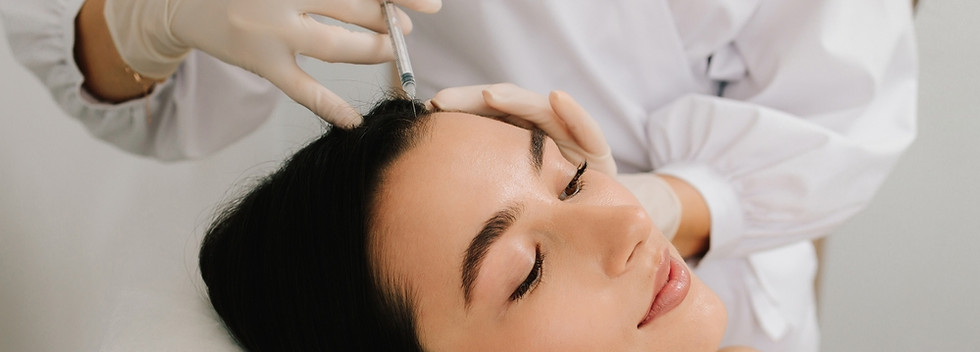
Scalp Microneedling
Scalp Microneedling with Exosomes
Thinning hair is one of the few changes people notice long before anyone else does. By the time it's visible to others, it's usually been on your mind for a year or more.
Scalp microneedling with topical exosomes is a treatment for the condition of your scalp and the appearance of your hair. It won't suit everyone, and it isn't a treatment for every cause of hair loss — which is why we assess before we recommend it, and why we'll sometimes tell you that something else would serve you better.
How the treatment works
Microneedling creates a controlled pattern of micro-channels in the scalp using a sterile needling device. The scalp responds as it would to any controlled stimulus, with increased local blood flow and a wound-healing response involving growth factors. Microneedling of the scalp has a longer history than exosomes do, and is the foundation of this treatment.
Exosomes are tiny extracellular vesicles that carry signalling molecules between cells. The serum is applied topically to the scalp during and immediately after needling, so that the channels created allow it to reach the upper layers of the skin rather than sitting on the surface.
We use topical, non-human-derived exosome products only. This matters, and the reason is in the section below.
What this treatment is, and what it isn't
We'd rather be straightforward with you than sell you something.
It may help where hair is thinning diffusely, where the scalp is in poor condition, and where follicles are still present and active. It is best thought of as supporting the environment your hair grows in.
It is not a cure for hair loss, and we can't promise regrowth. The evidence base for exosomes in hair is genuinely early. Microneedling of the scalp is better established, but neither is a guaranteed outcome and anyone telling you otherwise is overselling.
It won't help where follicles are scarred or no longer present, and it isn't the right first step where there's an untreated medical cause — thyroid disease, iron deficiency, an autoimmune condition, or a medication you're taking.
It isn't a substitute for medical treatment. Where your assessment points to a cause that has an established medical treatment, we'll say so and discuss the options with you in clinic.
Your scalp assessment
Hair loss has many causes and they don't all look different to the naked eye. Treating without assessing is how people spend money on the wrong thing for a year.
At your consultation we'll:
-
Examine your scalp and hair, including magnified assessment
-
Take a full history — pattern, duration, family history, medication, recent illness or stress
-
Discuss recent blood tests, or recommend which ones to ask your GP for
-
Photograph the scalp so change can be measured rather than guessed at
-
Tell you honestly whether we think this treatment will help you
If we think you should see your GP or a dermatologist first, that's what we'll say.
What to expect
The appointment. Around 45 to 60 minutes. Topical anaesthetic is applied first, so the treatment is generally comfortable — most people describe a light scratching or vibration.
Afterwards. The scalp may look pink and feel tender or tight for 24 to 48 hours. Avoid washing your hair, exercise, swimming and direct sun for 24 hours. You can return to work the same day.
A course, not a single session. Most people need three to four sessions spaced around four weeks apart, followed by maintenance.
Timeline. Nothing visible happens quickly. Some people notice reduced shedding within six to eight weeks. Changes in density, where they occur, typically become apparent between three and six months, because that's how long the hair cycle takes. We compare photographs at three months rather than relying on impressions.
Prices
Scalp consultation and assessment- Free
Scalp microneedling with topical exosomes — single session £395
Course of three £1,050
Course of four £1,350
Maintenance session, following a completed course £350
Scalp microneedling alone — single session £195
Scalp microneedling alone — course of three £525
Who we can and can't treat
We'll postpone or decline if you:
-
Are pregnant or breastfeeding
-
Have an active scalp infection, folliculitis or inflammatory scalp condition
-
Have a history of keloid scarring
-
Take anticoagulant medication or have a bleeding disorder
-
Are undergoing chemotherapy or radiotherapy
-
Have scarring alopecia, where the follicle is no longer present
-
Have an untreated underlying medical cause that should be addressed first
Treatment is available to over-18s only.
Frequently asked questions
Does it hurt?
Mildly. We numb the scalp first. Most people find it very manageable and read or chat throughout.
Will my hair grow back?
We can't promise that, and we won't. This treatment aims to support scalp condition and the appearance and density of the hair you have. Whether you see regrowth depends heavily on the cause of your loss and whether the follicles are still viable — which is exactly what the assessment is for.
How long before I know if it's working?
Three months, judged against photographs. Hair cycles are slow and impressions are unreliable.
Is it permanent?
No. Hair loss is usually progressive, and any benefit needs maintaining. We'll discuss a realistic long-term plan rather than selling you a course and waving you off.
Are exosomes injected?
Not by us, and they should not be by anyone in the UK. Injecting exosomes is not lawful here. Our exosome products are applied topically during microneedling, which is the permitted route. If another clinic has offered to inject them, that's worth asking about.
Can I combine it with other hair treatments?
Often, yes. We'll discuss what you're already using at consultation
and advise on sequencing. We provide you with a free 3-month supply of Pumpkin Seed softgels to enhance your results